
Max walked into the kitchen on a Saturday morning, looked at the baking dish soaking in the refrigerator, and asked if we were having dessert for breakfast. I told him it was a casserole. He asked if it was a dessert casserole. I told him to just wait until it came out of the oven. Forty minutes later, he carried his plate back to the counter for a second serving of our Protein French Toast Casserole and announced it was the best decision I had ever made on a weekend.
Jump to:
Why This Recipe Is Special
Most weekend breakfasts are either fast or filling, rarely both. This casserole is genuinely both because the whole thing is assembled the night before and slides into the oven while everyone is still in pajamas. No standing over a pan, no flipping, no managing multiple plates at once.
The protein comes from the egg and cottage cheese base that soaks into each bread cube overnight, so the interior stays custardy and soft while the tops of the bread pieces brown and caramelize during the bake. The raspberries and powdered sugar on top are Max's finishing touches, and at this point I have stopped trying to talk him out of either.
How To Make Protein French Toast Casserole
The first time I made this, I used fresh bread straight from a new loaf and the custard never fully absorbed into the center of each cube. The bottom layer was soggy, the top was dry, and Max called the texture "confusing." Day-old or slightly dried bread absorbs the custard all the way through because the moisture has already left the crumb and there is space for the egg mixture to move in.
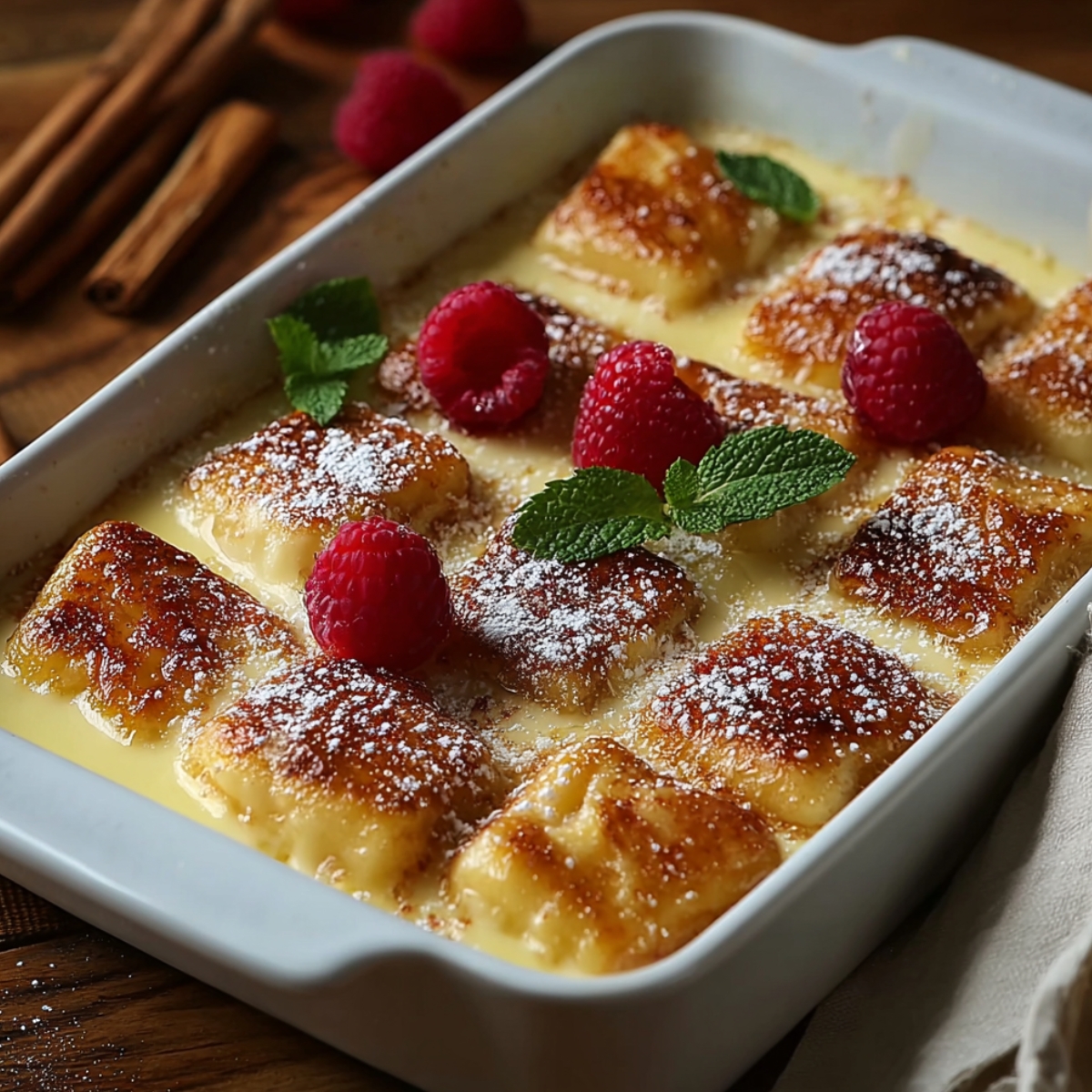
Leaving the assembled dish in the refrigerator overnight is what turns good French toast casserole into a genuinely great one. By morning, every bread cube is saturated evenly and the bake comes out with a soft, set interior and golden caramelized tops that look exactly like the image from the very first attempt.
Main Ingredients
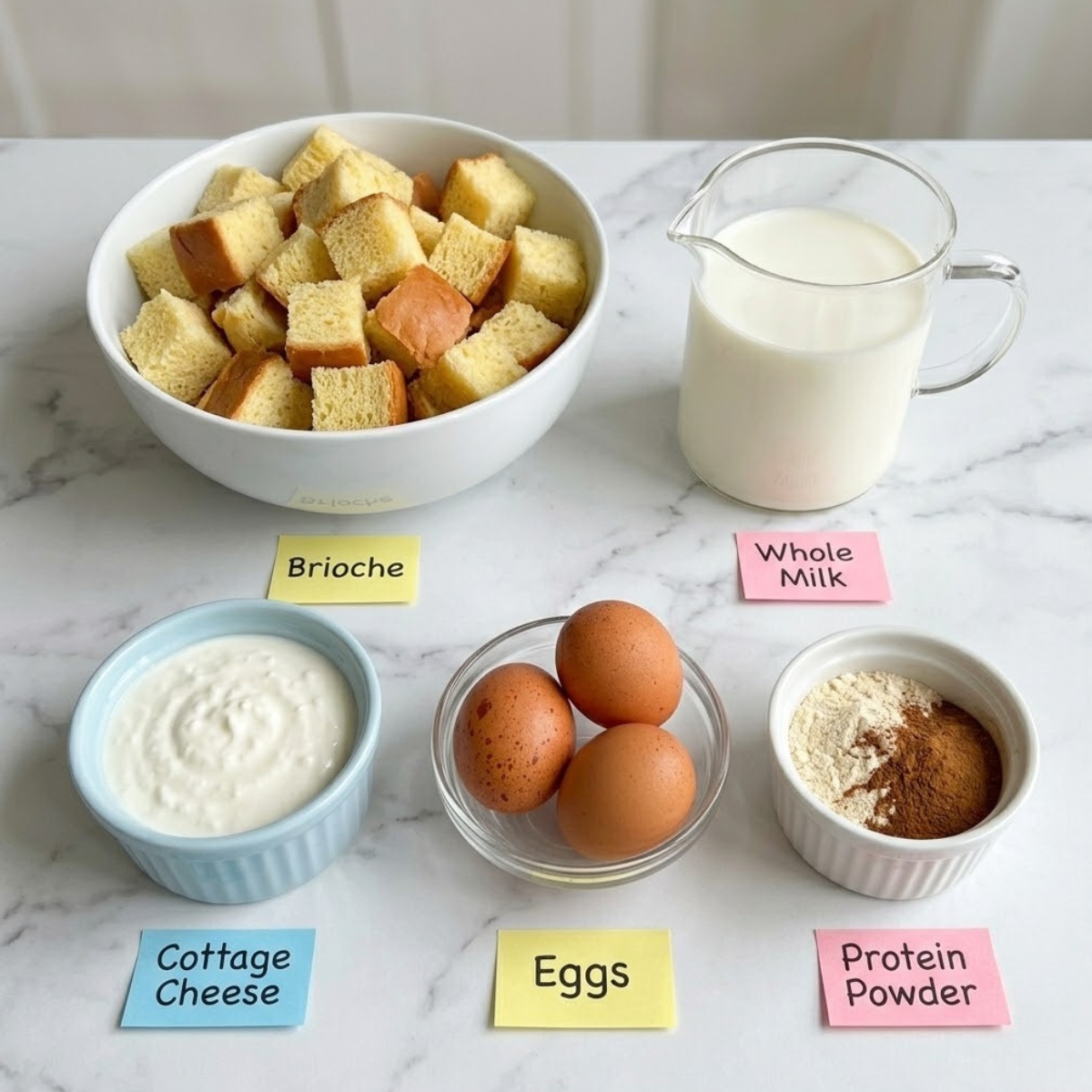
- 1 loaf brioche or thick white bread, cut into 2-inch cubes (about 8 cups), left out overnight to dry slightly — slightly stale bread absorbs the custard evenly all the way through without turning the base into a wet, collapsed layer
- 4 large eggs — the structural base of the custard that sets everything firm enough to slice and serve cleanly from the dish
- 1 cup cottage cheese, full fat or 2% — blended smooth into the custard to add protein and creaminess without any noticeable texture or flavor in the finished bake
- 1 cup whole milk — combined with the eggs and cottage cheese to create the pourable custard base that soaks through every cube overnight
- 1 scoop vanilla protein powder (about 30g) — whisked into the custard for an additional protein boost; vanilla flavor complements the cinnamon and egg base naturally
- 2 tablespoon maple syrup — adds gentle sweetness to the custard base without making the dish taste like dessert before the toppings are added
- 1 teaspoon vanilla extract — deepens the warm, custard-like flavor of the soak
- 1 teaspoon ground cinnamon — distributed through the custard so every cube carries the warm spice throughout rather than just on the surface
- ¼ teaspoon fine salt — sharpens the sweetness and keeps the custard from tasting flat
- Fresh raspberries — scattered across the top of the baked casserole just before serving for color, tartness, and visual contrast against the golden bread
- Powdered sugar, for dusting — a light dusting over the finished casserole gives it the finished appearance shown in the image
- Fresh mint sprigs — optional garnish tucked between the raspberries for color contrast at the table
Step by Step Instructions
Step 1: Dry the Bread and Prepare the Custard Base
- Cut the brioche or white bread loaf into 2-inch cubes and spread them in a single layer on a baking sheet the evening before you plan to make this so they dry out overnight at room temperature
- Alternatively, spread the bread cubes on the baking sheet and place them in an oven set to 275 degrees Fahrenheit for 20 minutes if you are starting the day of and do not have stale bread available
- Add the cottage cheese to a blender and blend on high for 20 seconds until completely smooth with no visible curds remaining, since unblended cottage cheese will leave small white pockets throughout the custard
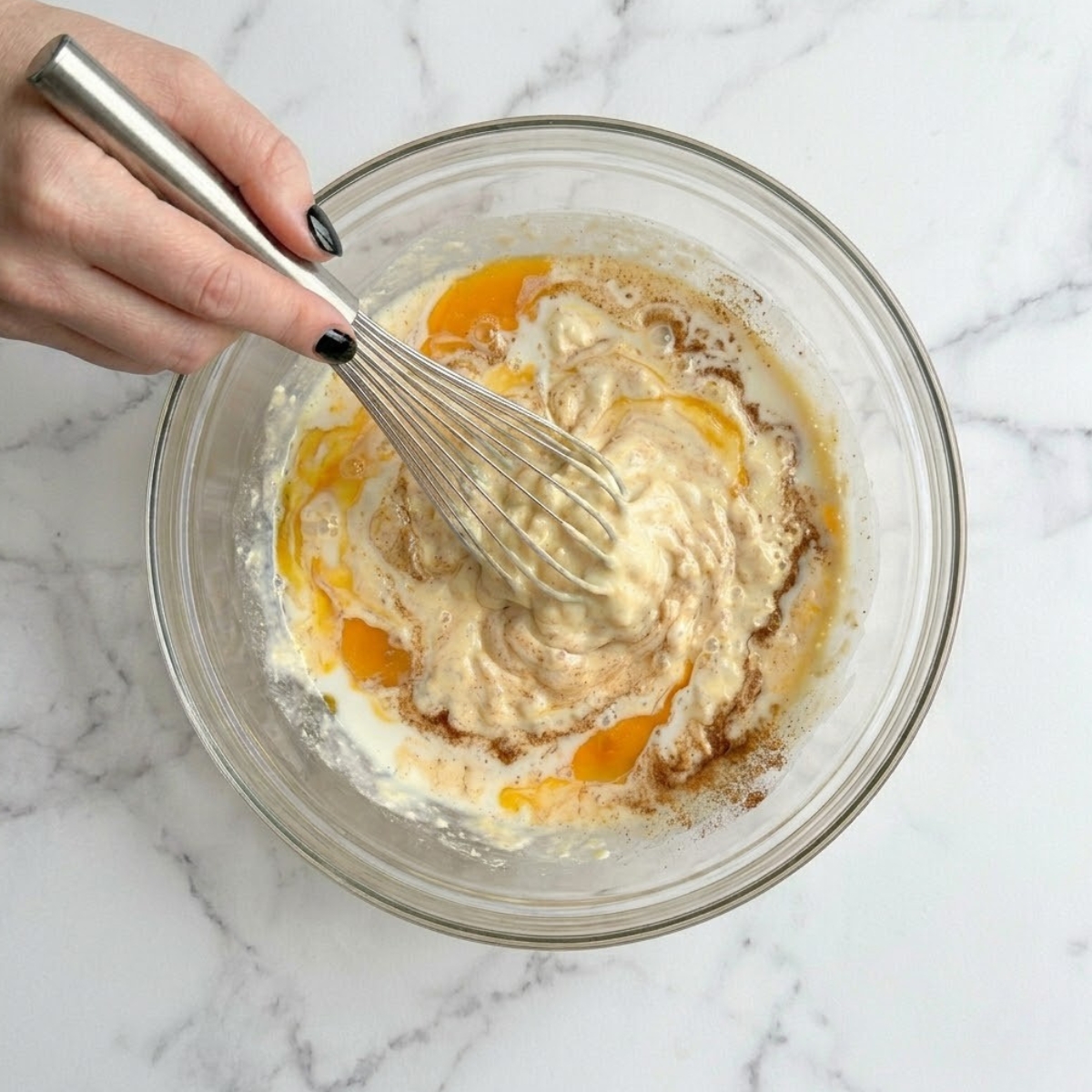
- Pour the blended cottage cheese into a large mixing bowl and whisk together with the eggs, whole milk, vanilla protein powder, maple syrup, vanilla extract, cinnamon, and salt until the mixture is fully uniform and the protein powder shows no dry clumps
Step 2: Assemble and Soak
- Lightly grease a 9x9 inch or equivalent baking dish with butter or cooking spray, making sure to coat the corners and sides so the edges of the casserole release cleanly after baking
- Arrange the dried bread cubes in the greased dish in a single even layer, packing them close together but not crushing them so the custard can flow between each piece during the overnight soak
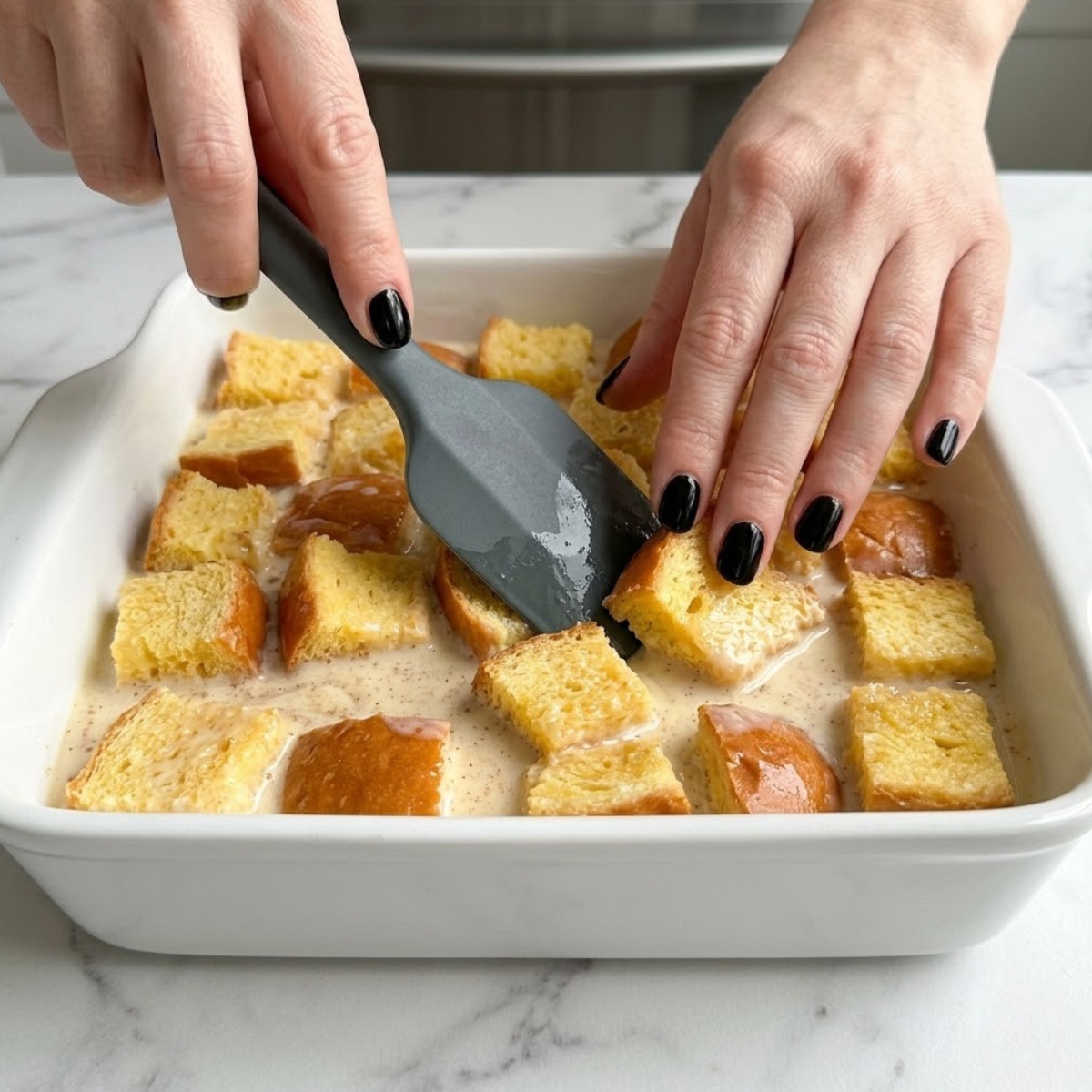
- Pour the custard mixture slowly and evenly over the entire surface of the bread, then use a spatula or the back of a spoon to gently press each bread cube down until it begins absorbing the liquid and sits below the surface
- Cover the dish tightly with plastic wrap and refrigerate for a minimum of 6 hours, though overnight produces the most even soak and the cleanest bake the following morning
Step 3: Bake the Casserole
- Remove the dish from the refrigerator 20 minutes before baking and set it on the counter so the cold does not cause uneven cooking in the oven
- Preheat the oven to 350 degrees Fahrenheit while the dish rests at room temperature, making sure the rack is positioned in the center of the oven for even heat distribution on both the top and bottom
- Remove the plastic wrap and bake uncovered for 35 to 40 minutes until the custard around the bread cubes is visibly set and no longer jiggles when you shake the dish gently from side to side
- Check at the 35-minute mark by pressing the center of the dish lightly with a spatula; it should feel firm and spring back slightly rather than collapsing or feeling wet, and the exposed tops of the bread cubes should be deep golden and caramelized
Step 4: Finish, Garnish, and Serve
- Remove the casserole from the oven and allow it to rest on a wire rack or folded kitchen towel for 8 to 10 minutes so the custard fully sets and the bread cubes hold their shape when cut and lifted from the dish
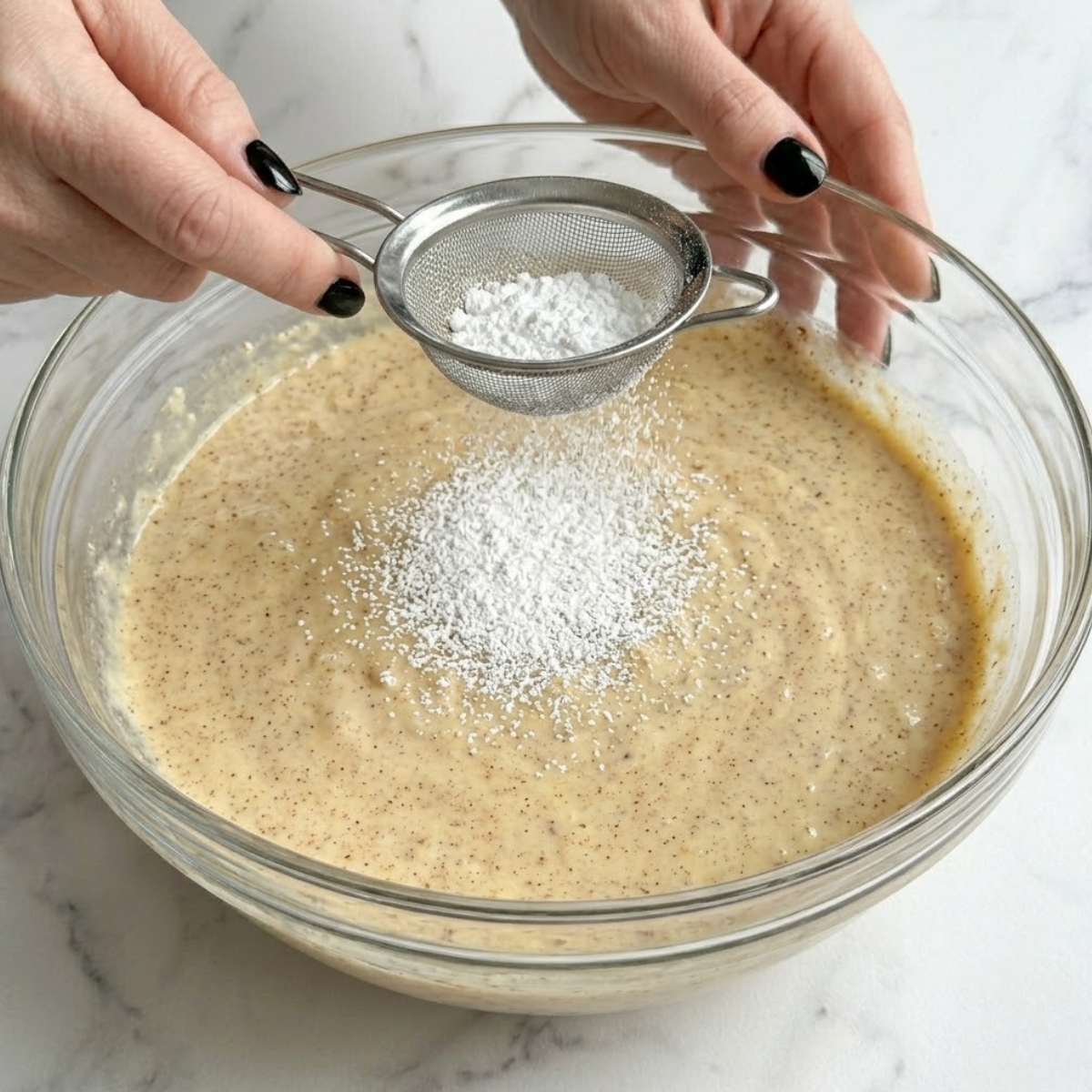
- Dust the entire surface lightly and evenly with powdered sugar using a small fine mesh strainer held about 8 inches above the dish so the sugar falls in a thin, even layer rather than clumping in one area
- Scatter fresh raspberries directly across the top, placing them between the bread cubes so they sit at the surface rather than sinking, then tuck small mint sprigs between the raspberries at even intervals
- Slice into portions using a sharp spatula and serve warm directly from the dish with extra maple syrup on the side for anyone who wants it
Protein French Toast Casserole Variations
Overnight Protein French Toast Bake With Blueberries and Lemon
A lighter, brighter version that Max requested after we had a bag of blueberries that needed using before the weekend was over. The lemon zest in the custard changes the character of the whole dish from warm and spiced to fresh and citrusy.
- Replace the cinnamon with 1 teaspoon of fresh lemon zest whisked directly into the custard base
- Fold 1 cup of fresh or frozen blueberries into the bread cubes before pouring the custard over so the berries are distributed throughout rather than only sitting on top
- Skip the raspberry garnish and finish with a lemon glaze made from ½ cup powdered sugar and 1 tablespoon of fresh lemon juice drizzled over the warm baked casserole
- The blueberries soften and burst during the bake, creating pockets of jammy fruit throughout each serving that work especially well against the lemon custard base
High Protein French Toast Casserole With Sourdough
The tangier, more structured version that came about after we used the end of a sourdough loaf rather than brioche. The chewier crumb of sourdough holds the custard soak differently and gives each bite more resistance without becoming tough after baking.
- Use a day-old sourdough loaf cut into 2-inch cubes, which naturally has less moisture than brioche and needs slightly less drying time before soaking
- Add an extra tablespoon of maple syrup to the custard base since sourdough has a natural tartness that needs a small amount of additional sweetness to balance
- Bake at the same temperature for the same time but check at 32 minutes since sourdough bakes slightly more quickly than the softer brioche crumb
- Finish with a drizzle of warm honey over the powdered sugar rather than fresh berries for a simpler, more rustic presentation that suits the heartier bread
Vegan Protein French Toast Casserole
A plant-based version that came together after a brunch where two guests needed a fully vegan option. The texture is slightly softer than the egg-based original but the flavor holds up well with the right substitutions in the right order.
- Replace the 4 eggs with 2 tablespoons of ground flaxseed combined with 6 tablespoons of water and allowed to gel for 5 minutes before adding to the custard base
- Use full fat coconut milk in place of whole milk and a plain unsweetened plant-based yogurt blended smooth in place of the cottage cheese
- Choose a plant-based vanilla protein powder since whey protein powder requires eggs to set properly and will leave the vegan custard too loose to bake cleanly
- Increase the bake time by 5 to 8 minutes and check the center carefully since the plant-based custard sets slightly more slowly than an egg-based base
Substitutions
Cottage Cheese: Plain Greek yogurt blended smooth substitutes directly for cottage cheese and gives a slightly tangier custard base with a comparable protein contribution. Ricotta cheese blended smooth also works and produces a richer, slightly denser custard layer that is closer to a bread pudding in texture. Always blend whichever substitute you use before adding it to the custard so no visible lumps remain after baking.
Vanilla Protein Powder: Unflavored protein powder works but the custard base will need an extra ½ teaspoon of vanilla extract and a touch more maple syrup to compensate for the sweetness and flavor the vanilla powder normally contributes. Collagen peptides dissolve fully into the custard without affecting flavor or texture and are a seamless unflavored alternative that still adds a meaningful protein increase per serving.
Brioche: Any thick, slightly enriched white bread works well, including challah or Texas toast. Standard sandwich bread tends to collapse too much during the overnight soak because the crumb is too soft to hold structure against the volume of custard. A sturdier artisan white or a slightly dense country loaf is the better choice if brioche is unavailable.
Whole Milk: Oat milk or unsweetened almond milk substitutes directly without changing the method. Full fat oat milk produces the closest texture to whole milk in the finished custard. Reduced fat dairy milk also works but the custard will be slightly less rich and the set slightly less firm after the same bake time.

Equipment
- 9x9 inch baking dish or equivalent deep casserole dish
- Large mixing bowl
- Blender or immersion blender for the cottage cheese
- Whisk
- Baking sheet for drying the bread cubes
- Rubber spatula
- Fine mesh strainer for dusting powdered sugar
- Plastic wrap for covering during refrigeration
- Wire rack for resting after baking
- Sharp spatula for slicing and serving
Storage Tips
Make Ahead Strategy
- Assemble the full casserole the evening before, cover tightly with plastic wrap, and refrigerate overnight so it is completely ready to bake in the morning with zero additional prep
- The assembled unbaked casserole can be refrigerated for up to 24 hours before baking; beyond that the bread begins to break down too far and the baked texture becomes denser than intended
- Prepare the garnishes the morning of rather than the night before since fresh raspberries and mint lose their appearance quickly once refrigerated on top of a warm dish
Refrigeration
- Store baked and cooled leftovers covered tightly in the baking dish or transferred to an airtight container in the refrigerator for up to 4 days
- Reheat individual portions in the microwave for 60 to 90 seconds covered loosely with a damp paper towel so the bread does not dry out around the edges during reheating
- The texture on day two is slightly denser than fresh from the oven but the flavor deepens noticeably and many people prefer the leftover version for exactly that reason
Freezing
- Bake the casserole fully, allow it to cool completely, then cut into individual portions and wrap each tightly in plastic wrap followed by aluminum foil before placing in a freezer-safe bag
- Freeze for up to one month and thaw overnight in the refrigerator before reheating in a 325-degree oven covered with foil for 15 minutes
- Do not freeze with the fresh raspberry garnish in place since the berries lose their texture completely during the freeze and thaw cycle; always add fresh garnishes after reheating
Family Secret Worth Sharing
The overnight rest in the refrigerator is not a shortcut for busy mornings. It is genuinely what makes this casserole different from a quickly soaked and immediately baked version. I tested both side by side one Sunday out of curiosity and the difference was significant enough that Max could describe it without prompting. The overnight version had a uniform, custardy interior all the way through every cube, while the quickly soaked version was wet in some places and dry in others depending on where each piece had been sitting in the dish. My grandmother made bread pudding the same way, always assembled the night before without exception, and she said the bread needed time to decide to become something else entirely. I think about that every time I slide this into the refrigerator on a Friday night knowing what Saturday morning is going to smell like.
Protein French Toast Casserole FAQs
How do you keep French toast casserole from getting soggy?
The two factors that cause sogginess are fresh bread and too little bake time. Always use day-old or lightly dried bread since fresh bread retains its own moisture and cannot absorb the custard without becoming waterlogged at the base. Bake uncovered at a full 350 degrees and check the center at 35 minutes; the custard should be visibly set and the bread tops should be caramelized and golden rather than pale and damp. Resting the dish for 8 to 10 minutes after baking also allows the custard to fully firm up before you cut it.
Can you make a protein French toast bake the night before?
Yes, and it is specifically designed for that. Assembling the casserole the night before and refrigerating it overnight is what produces the most even custard soak and the cleanest texture after baking. Remove the dish from the refrigerator 20 minutes before it goes into the oven so it does not go in ice cold, and add 5 minutes to the bake time if it feels particularly cold when you uncover it.
How do you add protein to French toast without it getting dry?
The key is building the protein into the custard base rather than adding it as a dry topping or a separate element. Blended cottage cheese and vanilla protein powder both dissolve or blend fully into the egg and milk base so they contribute protein without drawing moisture away from the bread during baking. Using full fat dairy throughout and not overbaking are the two most important factors; pull the casserole when the center is just set and still slightly soft rather than waiting for it to look completely firm.
The Breakfast That Made Saturday Morning Non-Negotiable
There is a very specific smell that comes out of the oven somewhere around the 30-minute mark, warm vanilla and cinnamon and caramelizing bread, that reliably gets Max out of bed without any other encouragement. At some point this casserole became the thing that signals the weekend has properly started in our kitchen.
If you enjoy building a full high protein brunch spread, this pairs naturally alongside Matcha Overnight Oats for a make-ahead table where everything is ready before anyone sits down, or next to Baked Protein Pancake Bowls for a spread that covers both sweet and filling without doubling the work. When you want individual portions that are easy to grab and go through the week, High Protein Pancake Muffins 25g Protein make the perfect companion batch to prep alongside this casserole on the same Sunday evening.
Don't forget to snap a picture of your Protein French Toast Casserole before that last slice disappears (trust me, it will disappear quickly!), and leave a rating below. We'd love to hear how this recipe becomes part of your brunch story.
Star Rate this recipe and join our kitchen family!
Related
Looking for other recipes like Protein French Toast Casserole? Try these:
- Ham & Cheese Egg Muffin Cups25 Minutes
- Breakfast Croissant Sandwich20 Minutes
- Mango Pancakes55 Minutes
- White Chocolate Chip Strawberry Muffins35 Minutes




Protein French Toast Casserole
Ingredients
Equipment
Method
- Cut the brioche into 2-inch cubes and spread them in a single layer on a baking sheet the night before, leaving them at room temperature overnight to dry slightly, or place in a 275-degree oven for 20 minutes if making same-day.
- Add the cottage cheese to a blender and blend on high for 20 seconds until completely smooth with no visible curds remaining, then pour into a large mixing bowl.
- Add the eggs, whole milk, vanilla protein powder, maple syrup, vanilla extract, cinnamon, and salt to the bowl with the blended cottage cheese and whisk until the mixture is fully uniform with no protein powder clumps remaining.
- Lightly grease a 9x9 inch baking dish with butter or cooking spray, making sure to coat the corners and sides fully so the edges of the casserole release cleanly after baking.
- Arrange the dried bread cubes in the greased dish in a single even layer, packing them close together but not crushing them so the custard can flow between each piece during soaking.
- Pour the custard mixture slowly and evenly over the entire surface of the bread, then press each cube down gently with a spatula until it begins absorbing the liquid and sits just below the surface.
- Cover the dish tightly with plastic wrap and refrigerate for a minimum of 6 hours or overnight so every bread cube absorbs the custard fully and the bake comes out with a uniform, soft interior.
- Remove the dish from the refrigerator 20 minutes before baking and preheat the oven to 350 degrees Fahrenheit with the rack positioned in the center of the oven for even heat distribution.
- Remove the plastic wrap and bake uncovered for 35 to 40 minutes until the custard around the bread cubes is visibly set, the tops are deep golden and caramelized, and the center springs back slightly when pressed with a spatula.
- Remove from the oven and rest on a wire rack for 8 to 10 minutes so the custard fully sets and the bread cubes hold their shape when cut and lifted from the dish.
- Dust the surface lightly with powdered sugar through a fine mesh strainer, scatter fresh raspberries between the bread cubes, tuck small mint sprigs in at intervals, and serve warm directly from the dish with maple syrup alongside.




Leave a Reply