
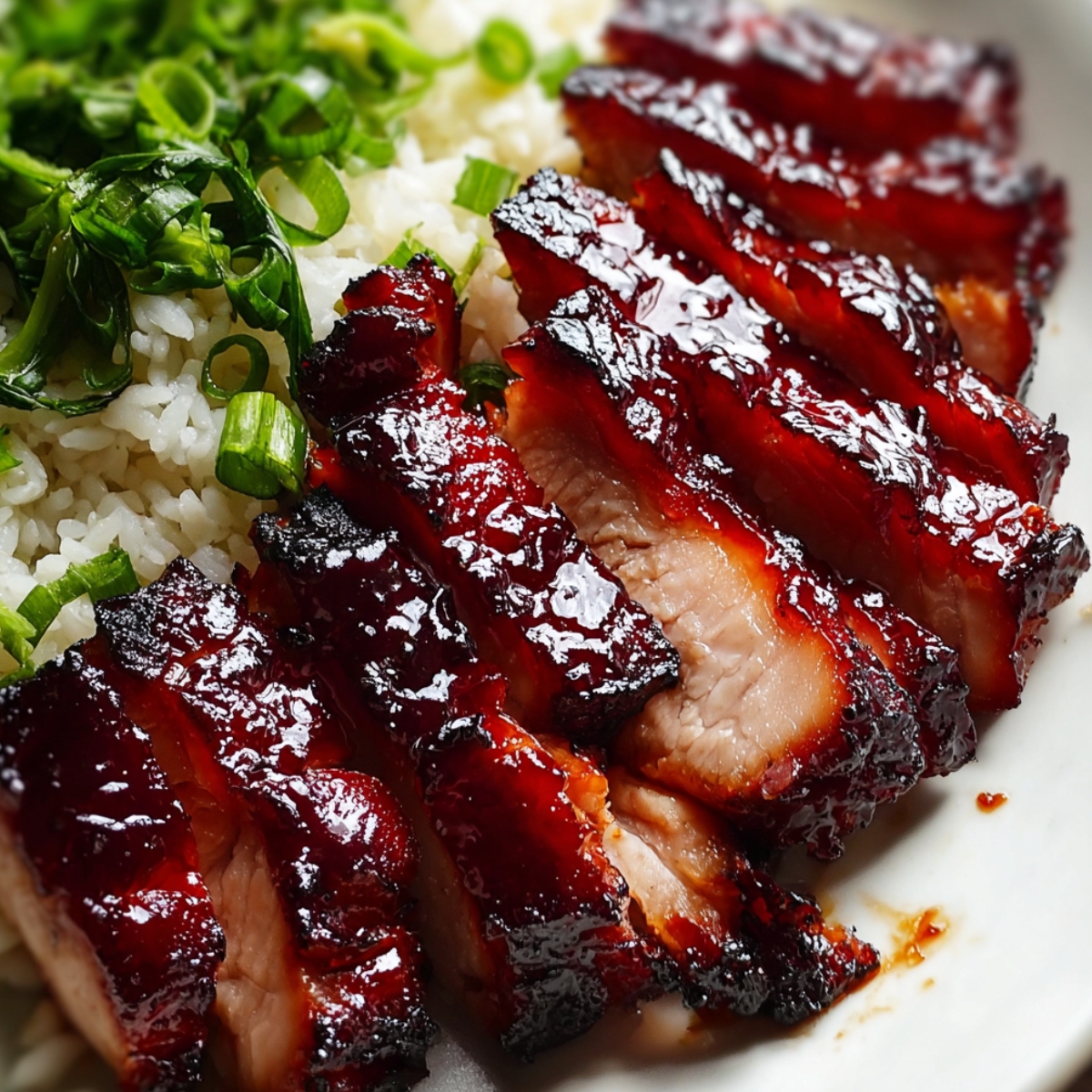
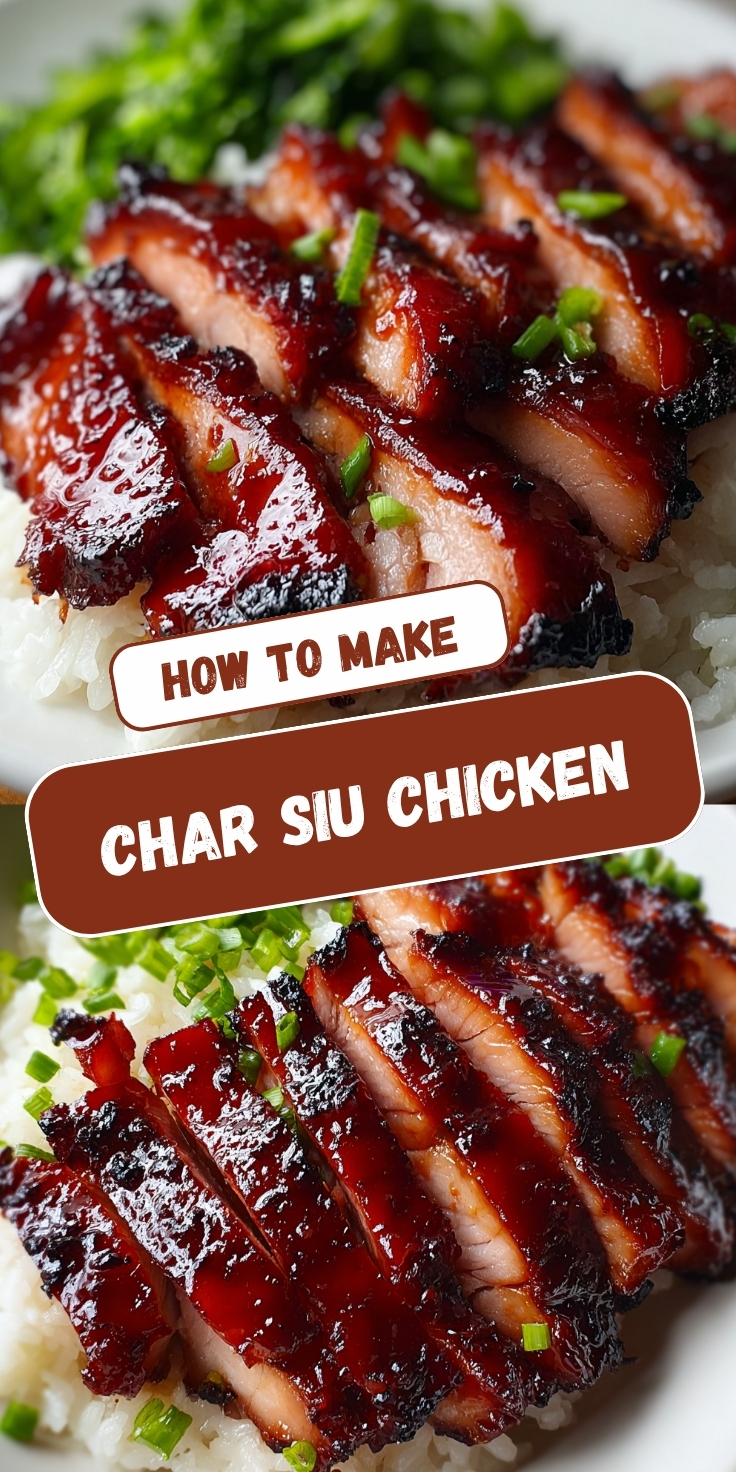
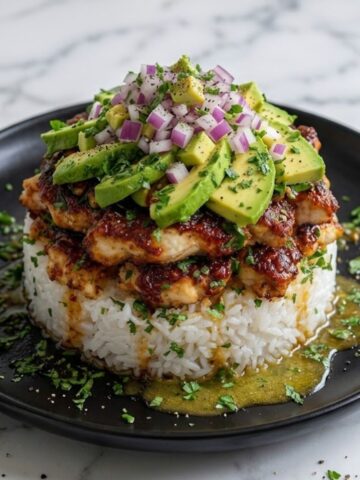
Max walked past the oven, stopped, and said "what is that smell?" It was the hoisin and honey caramelizing on the chicken as it roasted, turning the surface from pale marinade to the deep, lacquered red-brown visible in every slice on the plate. Making Char Siu Chicken at home for the first time felt like unlocking a flavor that had only ever come from a restaurant window before, and the result looked exactly like the image.
Jump to:
Why This Recipe Is Special
This recipe earns its place because the marinade does all of the flavor work before the chicken even touches the oven. The combination of hoisin, honey, soy sauce, five-spice, and sesame oil produces the deep, caramelized, sticky glaze visible across every piece in the image. The char marks at the edges of each slice come from a brief high-heat finish that pushes the glaze past sticky into slightly blistered and charred.
Max said it tasted "like the red pork from the Chinese restaurant but chicken." That is the most accurate description this recipe could receive and the one it was built for.
How To Make Char Siu Chicken
The first time I made this I did not let the chicken marinate long enough and the glaze sat on the surface as a separate layer rather than penetrating the meat. The color was right but the flavor did not run through each piece. Max tried a slice and said "the outside is great but the inside wants more." He was right.
Overnight marination is what takes this from a surface-coated chicken to something where every bite has the full char siu flavor profile regardless of how close to the edge of the piece you are eating. Eight hours minimum. Overnight is better.
Main Ingredients
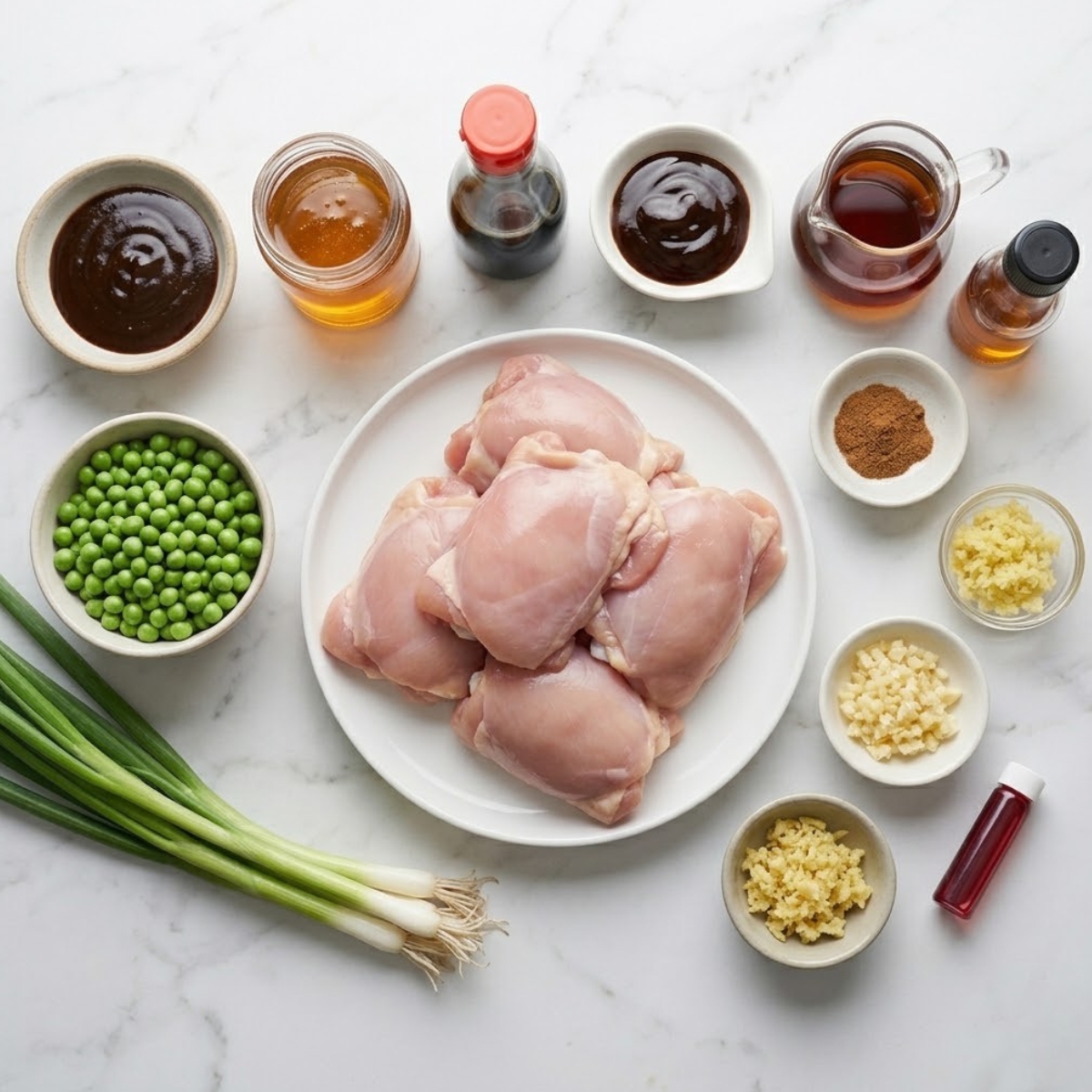
- 2 lbs boneless skinless chicken thighs — thighs develop the deepest color and stay the most juicy under the high-heat caramelization that produces the char marks visible on the surface of each piece in the image
- 3 tablespoon hoisin sauce — the primary flavor base of the char siu marinade; provides sweetness, depth, and the fermented soy note that is characteristic of the flavor
- 2 tablespoon honey — adds a floral sweetness and is responsible for the caramelization and slight stickiness of the glaze that coats every surface
- 2 tablespoon soy sauce — adds saltiness and umami depth throughout the marinade
- 1 tablespoon oyster sauce — deepens the savory, slightly oceanic flavor underneath the sweet notes
- 1 tablespoon Shaoxing rice wine or dry sherry — adds a subtle fermented complexity that rounds out the marinade flavor
- 1 teaspoon sesame oil — adds a nutty, aromatic note to the marinade that is distinctly Chinese barbecue in character
- 1 teaspoon five-spice powder — the defining spice blend of char siu; a small amount adds the characteristic warm, slightly anise-forward depth that distinguishes this from other sweet glazed chickens
- 3 garlic cloves, minced — provides a pungent savory base that carries through the caramelization into the finished glaze
- 1 teaspoon fresh ginger, grated — adds a warm, slightly sharp note that brightens the overall marinade
- 1 tablespoon red food coloring or 1 teaspoon red fermented bean curd (optional) — the source of the distinctive red color visible throughout the surface of the chicken in the image; the red bean curd adds a slightly funky, more authentic flavor alongside the color
- 2 tablespoon honey mixed with 1 tablespoon soy sauce for the final basting glaze — brushed over the chicken in the last 5 minutes of cooking to produce the sticky, glossy, deeply caramelized surface visible in the image
- Fresh green onions and green peas for garnish — the green elements scattered across the top of the plated chicken in the image
Step-by-Step Instructions
Step 1 — Make the Marinade and Marinate the Chicken
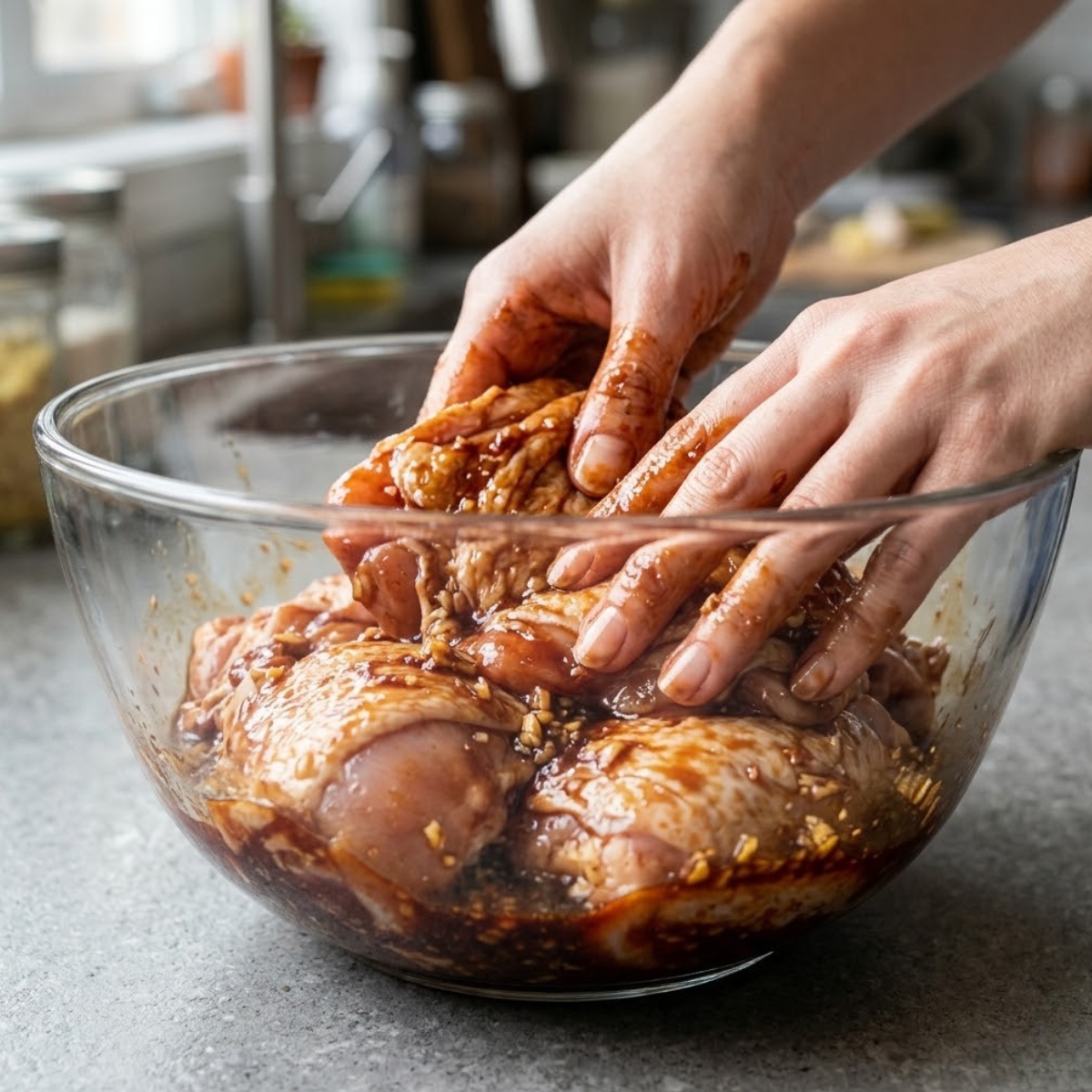
- Combine the hoisin sauce, honey, soy sauce, oyster sauce, Shaoxing rice wine, sesame oil, five-spice powder, minced garlic, grated ginger, and red food coloring or red fermented bean curd in a large bowl and whisk until fully combined and the color is uniform throughout
- Add the chicken thighs to the marinade and turn each piece until every surface is completely coated, pressing the marinade into the underside and any folds in the meat so no part of the chicken is pale
- Cover the bowl tightly with plastic wrap and refrigerate for at least 8 hours, or preferably overnight, so the marinade penetrates the meat and the flavor runs through every bite rather than sitting only on the surface
- Remove the chicken from the refrigerator 20 minutes before cooking so it comes closer to room temperature and cooks more evenly when it hits the hot oven
Step 2 — Roast the Chicken
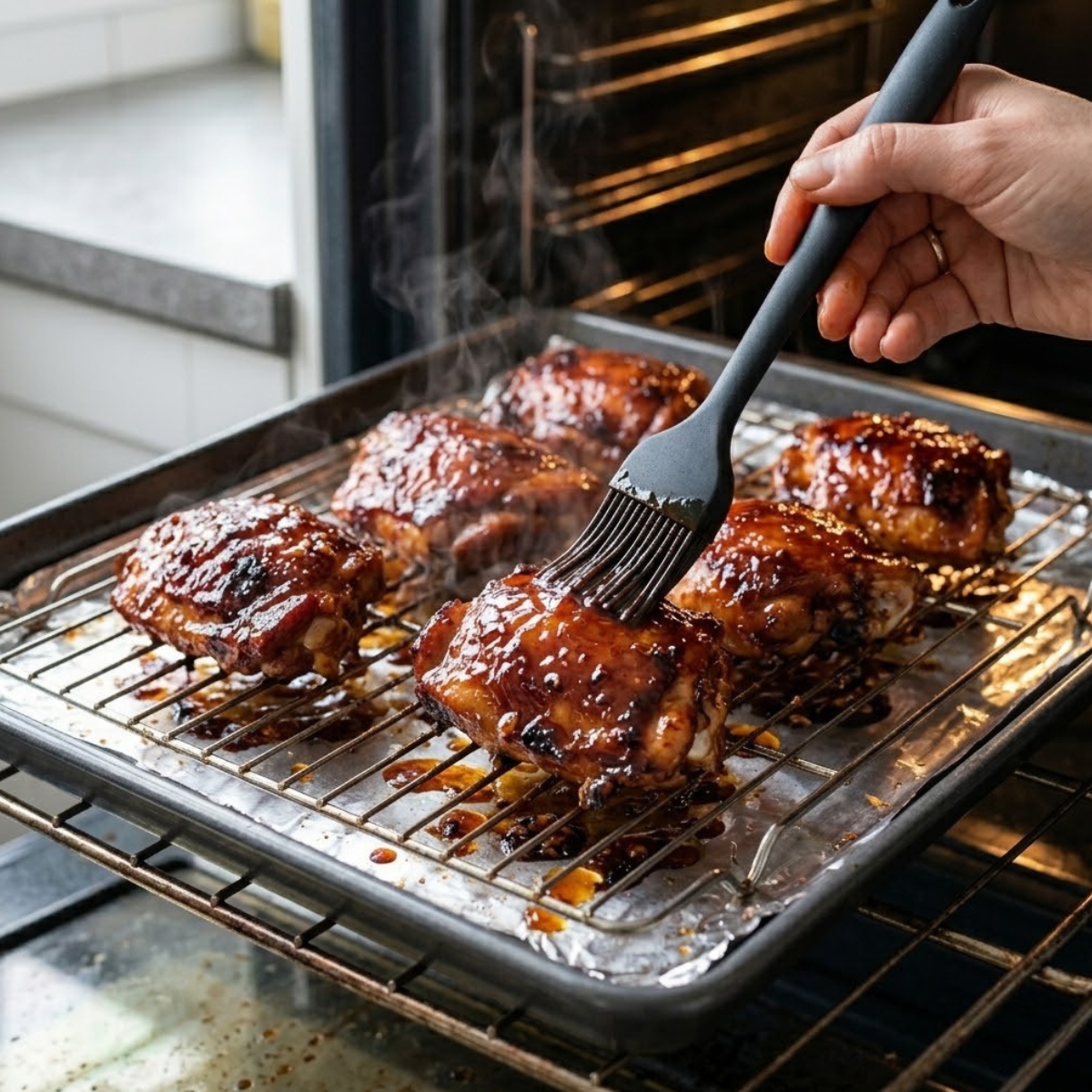
- Preheat the oven to 400°F and line a baking sheet or roasting pan with foil, then place a wire rack over the pan so the chicken sits elevated and the heat circulates underneath each piece during roasting
- Remove the chicken from the marinade and place each piece on the wire rack, reserving the remaining marinade in the bowl for basting
- Roast for 20 minutes at 400°F until the surface has developed a deep, reddish-brown color and the marinade has begun to caramelize against the heat
- Brush the reserved marinade generously over each piece at the 20-minute mark and return to the oven for another 10 minutes so the second coat of marinade caramelizes onto the first layer
Step 3 — Apply the Final Glaze and Char
- Mix the honey and soy sauce together in a small bowl for the final basting glaze while the chicken finishes its second roasting stage
- Remove the chicken from the oven and brush the honey-soy glaze over every surface of each piece so the glaze covers the caramelized marinade underneath
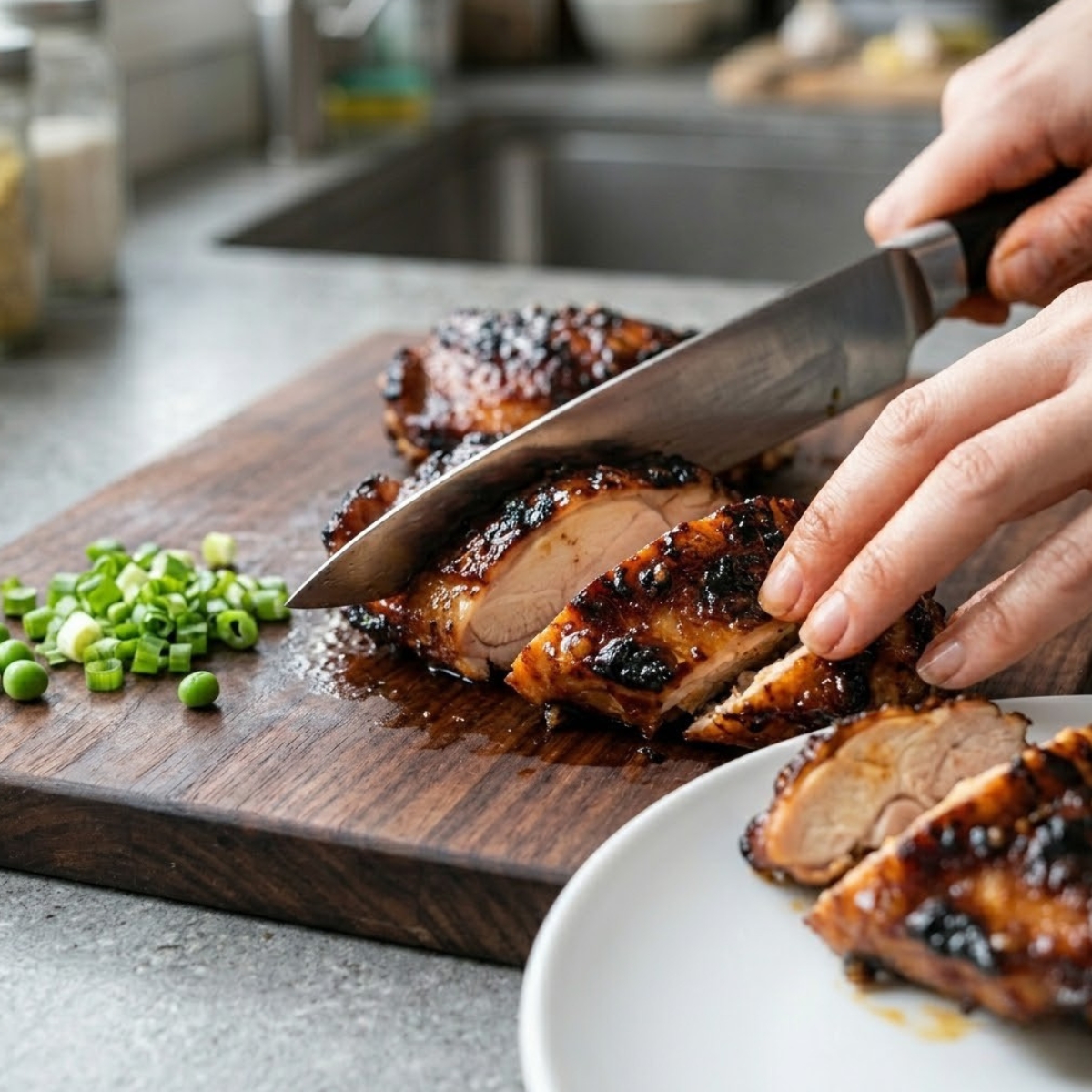
- Switch the oven to the broiler setting on high and return the glazed chicken to the oven for 3 to 5 minutes until the surface blisters, darkens at the edges, and develops the char marks and deeply lacquered appearance visible on each piece in the image
- Watch the chicken closely during the broiler stage since the honey glaze can shift from caramelized to burned within a single minute; pull the pan the moment the edges look deeply charred and the surface looks sticky and glossy
Step 4 — Rest and Serve
- Remove the chicken from the broiler and let it rest on the rack for 5 minutes so the juices redistribute and the glaze firms slightly from the heat of the chicken surface
- Slice each thigh into strips at a slight diagonal angle so the cross-section of the caramelized exterior and juicy interior is visible, similar to how the slices appear fanned across the plate in the image
- Arrange the sliced chicken on a white plate, overlapping the pieces slightly so the deep red-brown glaze is visible across every surface
- Scatter the sliced green onions and fresh green peas across the top of the plated chicken immediately before serving for the green garnish visible throughout the image
Char Siu Chicken Variations
Char Siu Chicken Air Fryer Version
- Marinate the chicken using the same marinade quantities and overnight refrigeration as the oven version
- Preheat the air fryer to 380°F and cook the marinated chicken pieces in a single uncrowded layer for 18 to 20 minutes, brushing with reserved marinade at the halfway mark and flipping once
- Apply the final honey-soy glaze and cook for 3 more minutes at 400°F until the surface is sticky, slightly charred at the edges, and glossy
- The air fryer version produces a crispier exterior than the oven version and achieves the char marks more reliably without needing the broiler step since the circulating heat concentrates more directly on the surface of each piece
Roast Char Siu Chicken Whole
- Apply the same marinade to a whole spatchcocked chicken rather than individual thighs, spreading it under the skin as well as over the surface for the deepest flavor penetration
- Marinate overnight and roast at 375°F for 40 to 50 minutes depending on the size of the chicken, basting three times during cooking for a more deeply layered glaze
- Finish under the broiler for the same 3 to 5 minutes and rest for 10 minutes before carving so the juices stay in the meat
- This version produces a dramatic table presentation that looks similar to the Cantonese roast chickens hanging in restaurant windows and works well for a celebratory dinner
Chinese BBQ Chicken Skewers
- Cut the marinated chicken thighs into 2-inch chunks and thread onto metal or soaked bamboo skewers before cooking for a version that produces maximum caramelized surface area per piece
- Grill over medium-high heat for 8 to 10 minutes, turning and basting every 2 minutes, until every side of each chunk has developed a deep caramelized exterior and char marks from the grill
- The skewer format cooks faster than whole thighs and produces more char marks per piece since the smaller pieces rotate against the heat more frequently during cooking
- Serve the skewers across a platter of steamed jasmine rice with the green onion and pea garnish from the original recipe scattered across the entire platter
Substitutions
Hoisin sauce substitute: A mixture of 2 tablespoons of soy sauce, 1 tablespoon of peanut butter, 1 tablespoon of honey, and ½ teaspoon of five-spice powder replaces hoisin in emergencies and produces a reasonably close flavor profile. The finished glaze will be slightly less sweet and less complex than hoisin-based char siu but still produces a deeply flavored, caramelized surface.
Shaoxing rice wine substitute: Dry sherry replaces Shaoxing wine in equal amounts with a very similar fermented, slightly sweet flavor. Mirin produces a sweeter result that works well in the marinade. A tablespoon of apple juice with a drop of rice vinegar can replace the wine if no alcohol-based substitute is available.
Oyster sauce substitute: Soy sauce with a small amount of fish sauce produces a similar deep umami base without the specific oyster flavor. For a fully vegetarian version, mushroom soy sauce replaces oyster sauce with a deeply savory, slightly smoky flavor that works well in the char siu context.
Red food coloring substitute: Red fermented tofu or red miso with a pinch of paprika produces the reddish color from natural ingredients rather than food dye. The color will be slightly less vivid than the image but the flavor from the fermented ingredients adds a more authentic, complex depth that food coloring cannot contribute.
Equipment
- Large baking sheet lined with foil
- Wire rack to elevate the chicken above the pan
- Pastry brush for the marinade and glaze
- Small bowl for the final honey-soy glaze
- Instant-read meat thermometer
- Sharp knife and cutting board for slicing
- White serving plate for the presentation in the image
Storage Tips
Make Ahead Strategy
- The marinade can be made up to 5 days ahead and stored in a sealed jar in the refrigerator; the garlic and ginger flavors deepen over time making the flavor more complex when used on day three or four compared to day one
- Marinate the chicken up to 24 hours ahead and keep covered in the refrigerator so the morning cooking is only the roasting and glazing time
- The basting glaze can also be made ahead and stored at room temperature for up to 3 days since the honey and soy sauce do not require refrigeration in that quantity
Refrigeration
- Store leftover cooked char siu chicken in an airtight container in the refrigerator for up to 4 days; the flavor of the glaze continues to deepen overnight and the leftover chicken is excellent cold in a bowl over rice or warm in a stir-fry
- Reheat in a 375°F oven for 8 to 10 minutes so the glaze warms and becomes sticky again rather than going limp in the microwave, which produces a softer, less appealing exterior
- Slice cold leftover char siu chicken thinly and serve over a bowl of noodles or rice with extra hoisin sauce for a quick second meal from the same batch
Freezing
- Freeze the marinated raw chicken in a sealed bag for up to 3 months; thaw overnight in the refrigerator and roast directly following the recipe for a result nearly identical to a freshly marinated batch
- Freeze the cooked sliced chicken in a single layer before transferring to a sealed bag for up to 2 months; reheat from frozen in a 375°F oven for 12 to 15 minutes
- Do not freeze with the final honey-soy glaze already applied since the sugars in the glaze change texture after freezing and the glossy, sticky surface cannot be restored without reapplying fresh glaze after reheating
Family Secret Worth Sharing
The final broiler step in this recipe came from watching my mother make any glazed meat. She always said the oven does the cooking but the broiler does the finishing, and that the difference between a good glazed chicken and a great one was always those last three minutes under direct heat. She applied it to spare ribs, to ham, and to a char siu pork she made every Lunar New Year that came out of the broiler looking exactly like something you would order in a restaurant. I applied the same principle to this chicken the first time I made it and the surface went from sticky and good to lacquered and striking in the same three minutes she always gave it. Max stood at the oven watching the broiler stage and said "is it supposed to look like it's about to burn?" Yes. That is exactly what it is supposed to look like.
Char Siu Chicken FAQs
How do I get the deep red color on char siu chicken?
The red color comes from two sources: the red food coloring or red fermented bean curd in the marinade and the caramelization of the honey and hoisin during roasting. The food coloring or fermented tofu gives the raw marinade its initial red tone which intensifies as the chicken roasts. Without either of these the chicken will be a deep brown rather than red-brown, which is still delicious but less visually dramatic. For the most authentic red visible in the image, include the red fermented bean curd since it contributes both color and a deeper, more complex flavor than food coloring alone.
Can I make char siu chicken in the air fryer?
Yes and the air fryer produces excellent results. Cook at 380°F for 18 to 20 minutes, brush with reserved marinade at the halfway point, flip, and cook for another 8 minutes. Apply the final honey-soy glaze and cook for 3 minutes at 400°F for the charred, sticky finish. The air fryer circulates heat more directly against the chicken surface than a conventional oven and produces more even caramelization without needing the broiler step that the oven version requires.
Why is my char siu chicken glaze burning before the chicken is cooked through?
The sugar content in hoisin sauce and honey is high enough to burn significantly faster than the protein in the chicken cooks through. Two adjustments prevent burning: use a wire rack so the chicken is elevated above the direct heat of the pan, and apply the marinade in two separate basting applications rather than all at once. Baste at the halfway mark and again at the final glaze stage rather than loading all the sauce onto the raw chicken before it enters the oven.
The Plate That Looks Like the Restaurant Window
Max looked at the sliced chicken on the white plate, the deep red-brown glaze caramelized across every surface, and said "that looks like the char siu from the restaurant on the main street." That was the goal from the first time I tried to make this. Not close to it. Exactly like it. The flavor, the color, and the slightly charred, lacquered finish that makes everyone at the table reach across without being asked. We made it. Max confirmed it. The restaurant on the main street is now a second option.
If you are building an Asian chicken collection where every recipe earns that kind of recognition before the first bite, Asian Chicken Salad brings the same bold flavor profile in a completely different direction with sesame dressing, noodles, and mandarin oranges that Max considers serious competition for this plate on any given weeknight. Air Fryer Honey Butter Garlic Chicken Tenders are the quick weeknight version of that sticky, caramelized chicken craving in a golden format that disappears from the plate in twenty minutes flat. And for a completely different flavor direction that keeps the same elevated dinner feel with a lighter, herb-forward approach, Garlic Butter Chicken with Asparagus is exactly what this kitchen makes on the evenings when the week needs something that feels like a real meal without requiring an overnight marinade.
Don't forget to snap a picture of your Char Siu Chicken before that first slice disappears (trust me, it will disappear quickly!), and leave a rating below. We'd love to hear how this recipe becomes part of your dinner story.
Star rate this recipe and join our kitchen family!
Related
Looking for other recipes like Char Siu Chicken? Try these:
- Buffalo Chicken Stuffed Peppers50 Minutes
- Spicy Apple Soup40 Minutes
- Korean Steak Sandwich55 Minutes
- Cheesy Chicken Spinach Casserole40 Minutes

Char Siu Chicken
Ingredients
Equipment
Method
- Whisk the hoisin, honey, soy sauce, oyster sauce, rice wine, sesame oil, five-spice, garlic, ginger, and red coloring together until fully combined, then add the chicken thighs and turn until every surface is coated.
- Cover tightly and refrigerate for at least 8 hours or overnight so the marinade penetrates the meat fully, then remove 20 minutes before cooking.
- Preheat the oven to 400°F, line a baking sheet with foil, place a wire rack over the pan, and arrange the marinated chicken pieces on the rack.
- Roast for 20 minutes until the surface has developed a deep reddish-brown caramelized color, then brush generously with reserved marinade and return to the oven for 10 more minutes.
- Mix 2 tablespoons of honey with 1 tablespoon of soy sauce for the final glaze, brush it over every surface of each chicken piece, then switch the oven to high broil.
- Broil for 3 to 5 minutes watching closely until the surface blisters, darkens at the edges, and develops the lacquered char marks visible in the image; pull immediately when the edges look deeply charred.
- Rest on the rack for 5 minutes, then slice each thigh into diagonal strips so the caramelized exterior and juicy interior are both visible in each piece.
- Arrange the sliced chicken on a white plate with pieces overlapping slightly, then scatter green onions and fresh peas across the top and serve immediately.


Leave a Reply